

SAPdude runs a YouTube channel about SAP plant maintenance and offers helpful SAP courses on his website. His SAP tutorials are a real help if you are learning SAP or trying to get better at it, and we have been fans for a while.
We asked him to test our apps and gave him access to FastWork, FastPlan, and FastForms. We did not pay him for the review, and he made it clear upfront that access does not buy a positive verdict.
Here are the key points from his review of Arkyn's FastApps.
The verdict in short.
His takeaways:
- Did Arkyn simplify the work? For the process he tested, his answer was yes.
- FastWork is the strongest part of the solution, and it is designed around technicians.
- FastForms: a return-to-service checklist built in minutes, with no SAP QM, inspection lots, or inspection characteristics.
- FastPlan is not SAP Resource Scheduling with an Arkyn logo: it has its own approach to capacity, scheduling, and SAP integration.
- Across all three apps, he found the screens clean and the actions easy to understand. He expects less training as a result.
- Running SSAM instead takes several skill sets, and no one person can cover all of them.
His caveats:
- Using Arkyn means another vendor in your architecture.
- The apps are configurable but special requirements may still need support from Arkyn or an implementation partner.
- No app repairs bad master data.
- You should compare the full operating model, not license prices.
His recommendation:
- Run a pilot before you commit.
- Measure how many technicians actually use the apps, how long reporting takes, how good the data in SAP is, how much planning and support effort it takes, whether schedules get kept, and what it all costs.
Maintenance without SAP screens.
SAPdude runs his videos inside a fictional company called Clutch Masters.
Clutch Masters Texas is the original workshop and the base for the company's SAP template. In this video, Clutch Masters has bought a second workshop in New Jersey: a main repair hall, a dyno area, a warehouse, and a garage near the harbor.
The site has two planners, and a lot of hands-on people maintaining lifts, welding equipment, pumps, and air compressors.

New Jersey inherits the Texas SAP template: organizational structure, work centers, technical objects, task lists, materials, and the phase-based maintenance process. SAP stays the system of record.
The test is whether the planners and technicians can get through a working day mostly in the FastApps, with SAP running underneath, and whether that gets them more wrench time.
"If finding those answers requires 12 screens, 40 fields, and a training document created in 2018, the problem is not the technician. The problem is the solution."
SAPdude
Getting SAP on a phone.
Suppose a workshop employee wants to report a problem. The standard S/4HANA option is SAP's own Create Maintenance Request app, a Fiori web app.
The app supports the phase-based process, and key-user adaptation lets you hide, rename, or add fields. SAPdude’s take on this option is that a responsive web app isn’t automatically designed for the field.
"A web app compressed onto a phone is still a web app compressed onto a phone."
SAPdude
The next option he looks at is SAP’s own mobile app.
The team you need to run SSAM.
This is the part of the video I would send to anyone sizing up SAP Service and Asset Manager (SSAM).
SAPdude is not dismissive of SSAM. He calls it a serious platform that supports offline execution, notifications, orders, time, materials, measurements, attachments, forms, and more.
His reservations are about the effort it takes to implement and run it. The SSAM architecture includes:
- A mobile client built with MDK, SAP's Mobile Development Kit.
- SAP BTP (Business Technology Platform) Mobile Services.
- The Cloud Connector.
- A mobile add-on.
- MAIF (Mobile Application Integration Framework) configuration.
- OData (Open Data Protocol) integration.
- Plus whatever extensions your project needs.
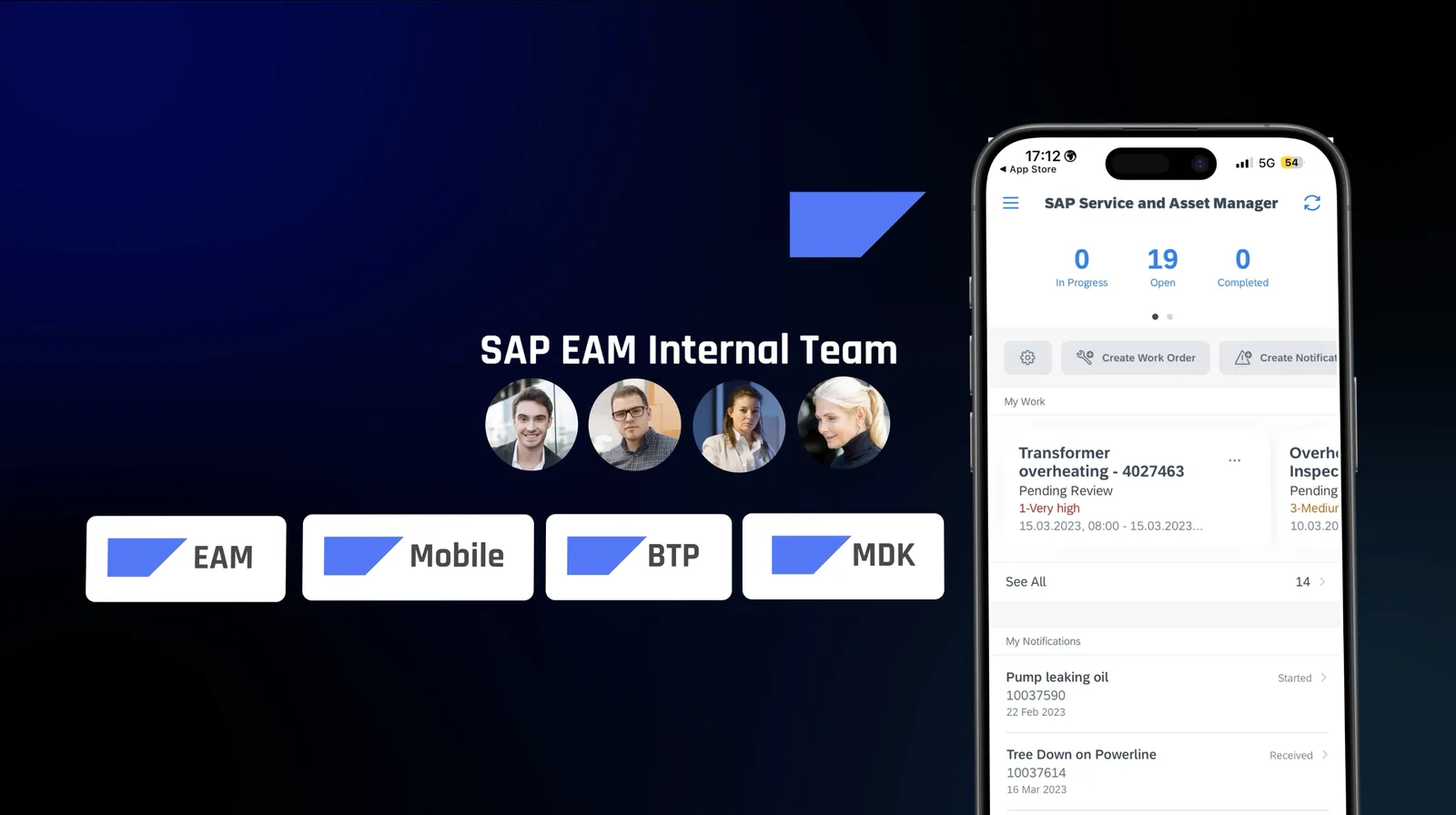
In a real implementation, that means several skill sets: SAP EAM (enterprise asset management), MAIF, and Syclo, plus BTP or MDK capability for deeper extensions.
With standard SAP, a company with the right internal competence can control more by itself. The question is whether you have those people.
He also mentions that he has seen mobile projects struggle with synchronization volume, upgrades, and performance when the architecture was not designed carefully.
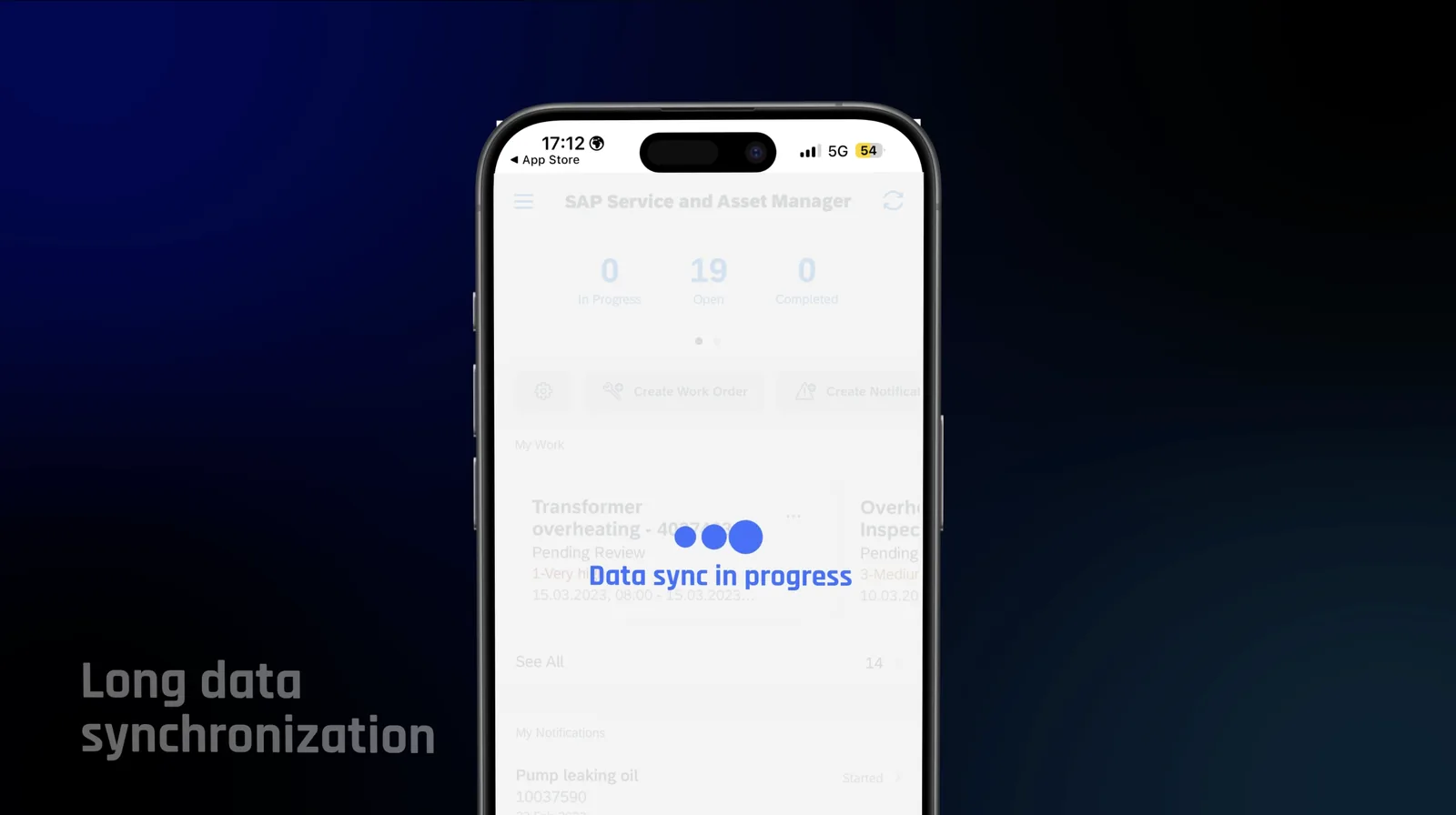
From our experience, part of the reason for sluggish syncing is the sync model itself. Each device downloads its data set and then checks back with SAP for changes. At shift start, SAP is answering hundreds of devices at once, and the more equipment, orders, and attachments each one holds, the longer every sync takes. SSAM users on SAP Community report sync times of 2 to 4 minutes even when nothing has changed.
FastCloud works the other way around. When something changes in SAP, SAP publishes it as an event, and FastCloud pushes the change to the apps that need it. We wrote up how that works, and why it matters on a clean core, in: Event-driven SAP integration on a clean core.
SAPdude is clear that Arkyn isn’t zero work on the SAP side either. Working with Arkyn's FastApps still requires the Cloud Connector, Arkyn’s backend components, security setup, and mapping to your PM or CS configuration.
Standard SAP for planning and forms.
He applies the same test to planning and forms.
For scheduling, standard SAP Resource Scheduling (RSH) gives you schedules, capacity views, and graphical planning. He says it can be the right answer. If you run RSH or MRS (Multiresource Scheduling) today, you may want to read SAP's plans for their planning software: The SAP MRS and RSH roadmap.
For checklists, he covers two standard options:
1) SAP Quality Management (QM). S/4HANA can integrate EAM with QM and create inspection lots and results recording. He says it is the right call when you need a controlled EAM and QM process. For a ten-question compressor checklist, he compares it to building an airport because somebody purchased a bicycle.
2) SAP Dynamic Forms. Forms are designed on BTP and used with supported objects, also through SSAM. He calls it good capability, and one more component in the architecture. SAPdude has a good guide about it.
His conclusion is that standard SAP can be excellent without being the simplest, fastest, or cheapest answer for every plant. That is why companies evaluate products built on top of SAP.
"If someone tells you that SAP standard is always best simply because the logo is blue, either they have never worked beside a technician or a sales target is doing some heavy lifting."
SAPdude
What happened in the test.
The technician reports the leak.
At 7 a.m., a technician finds hydraulic oil under one of the car lifts.
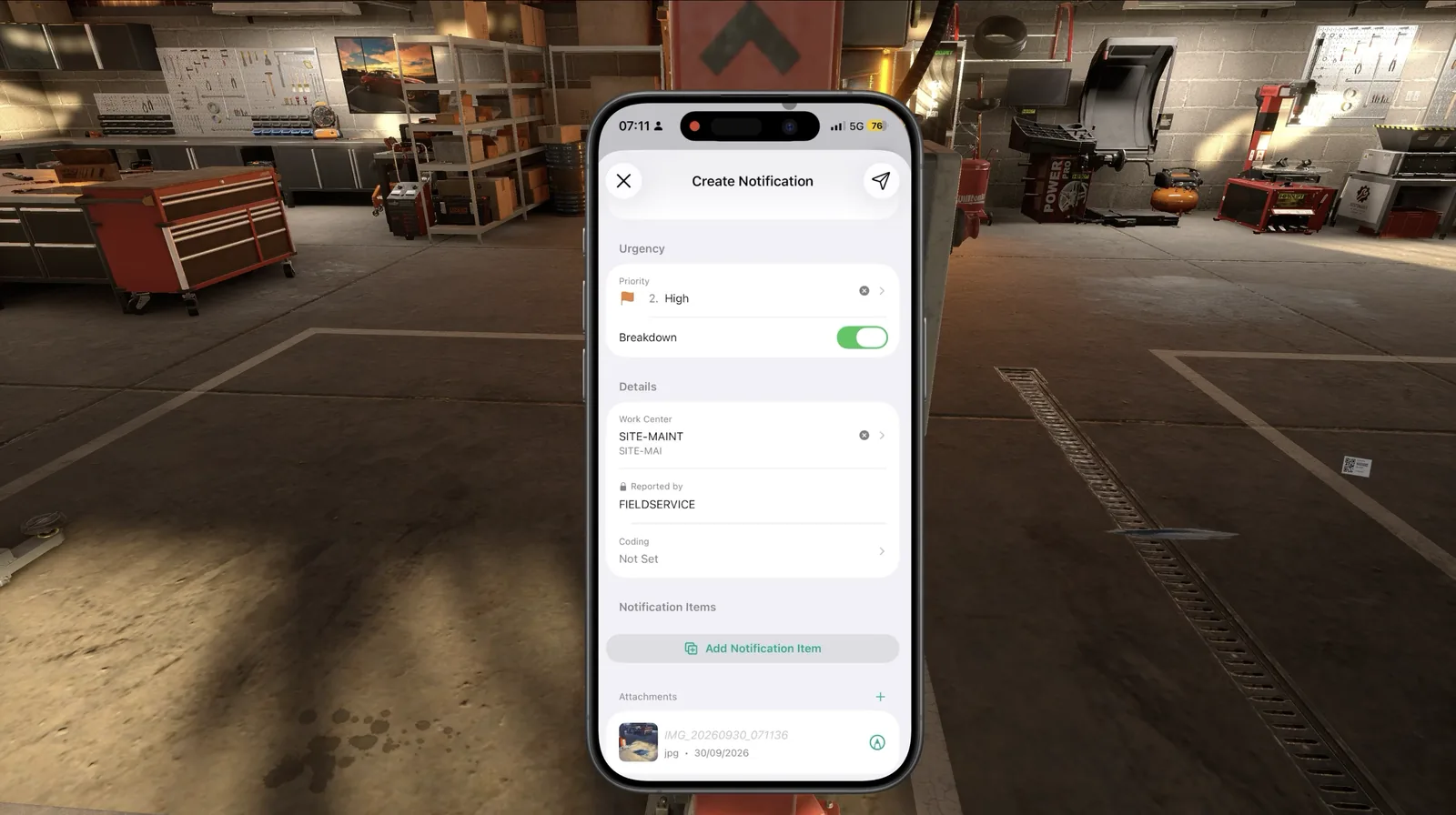
He tags the lift out, opens FastWork, scans the QR code on the lift, adds a photo, and writes "Hydraulic leak. Car lift unavailable." The notification lands in S/4HANA without any manual sync.
The planner builds the checklist.
The planner sets up the repair in SAP, with the work, the spare parts, and the estimated effort.
Then he builds a short inspection and return-to-service checklist in FastForms by dragging and dropping the fields in the form builder. He then previews how the form looks on a phone and assigns it to the order.
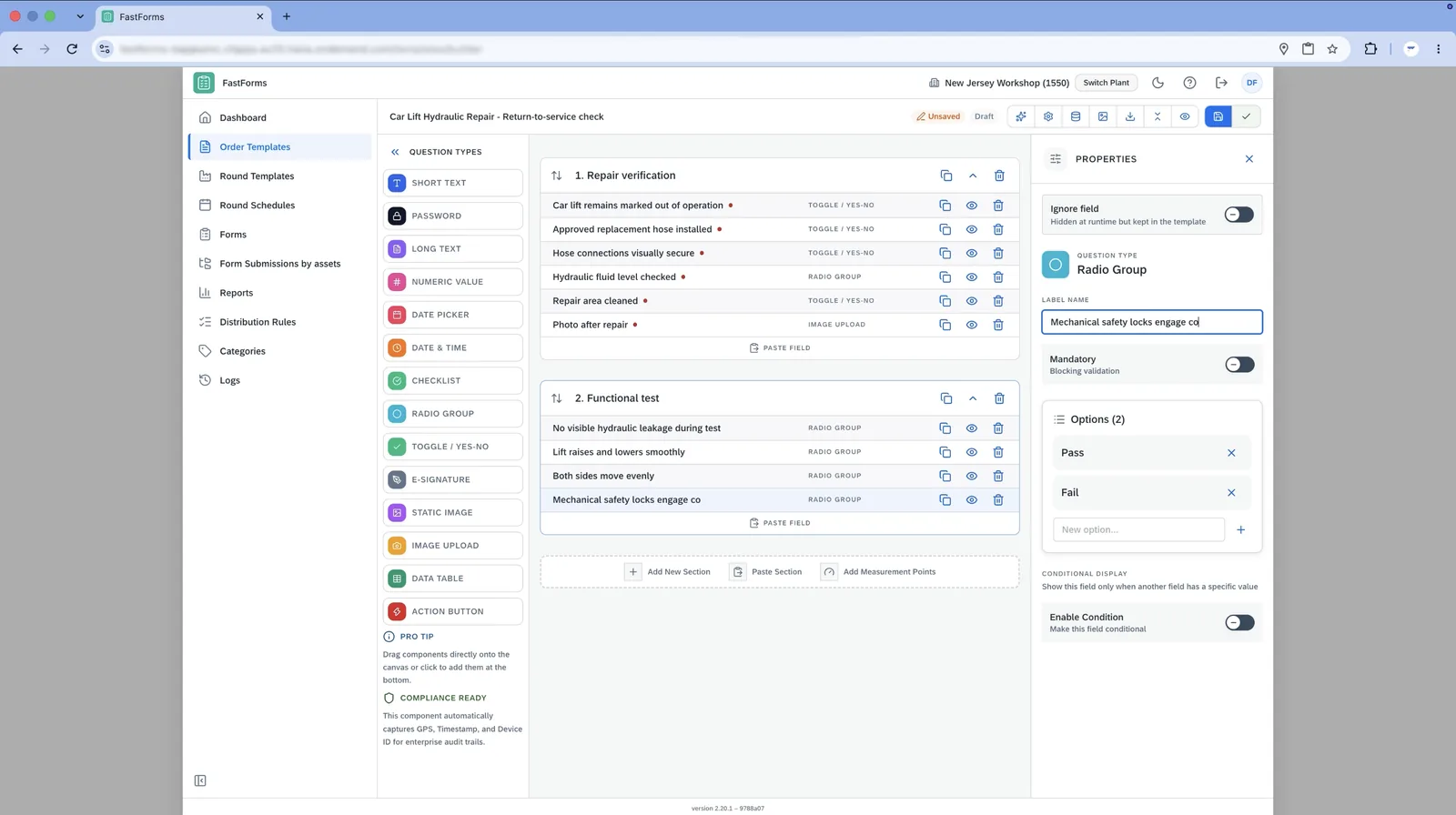
He could have set a rule so the right checklist attaches to every order of that type, which is how you would run inspection rounds. For the test, he assigns it by hand.
The planner schedules the job.
Scheduling happens in FastPlan. First, the planner builds a new perspective, FastPlan's way of configuring planning views, from scratch with an order table, a timeline, a Gantt chart, and a capacity overview.
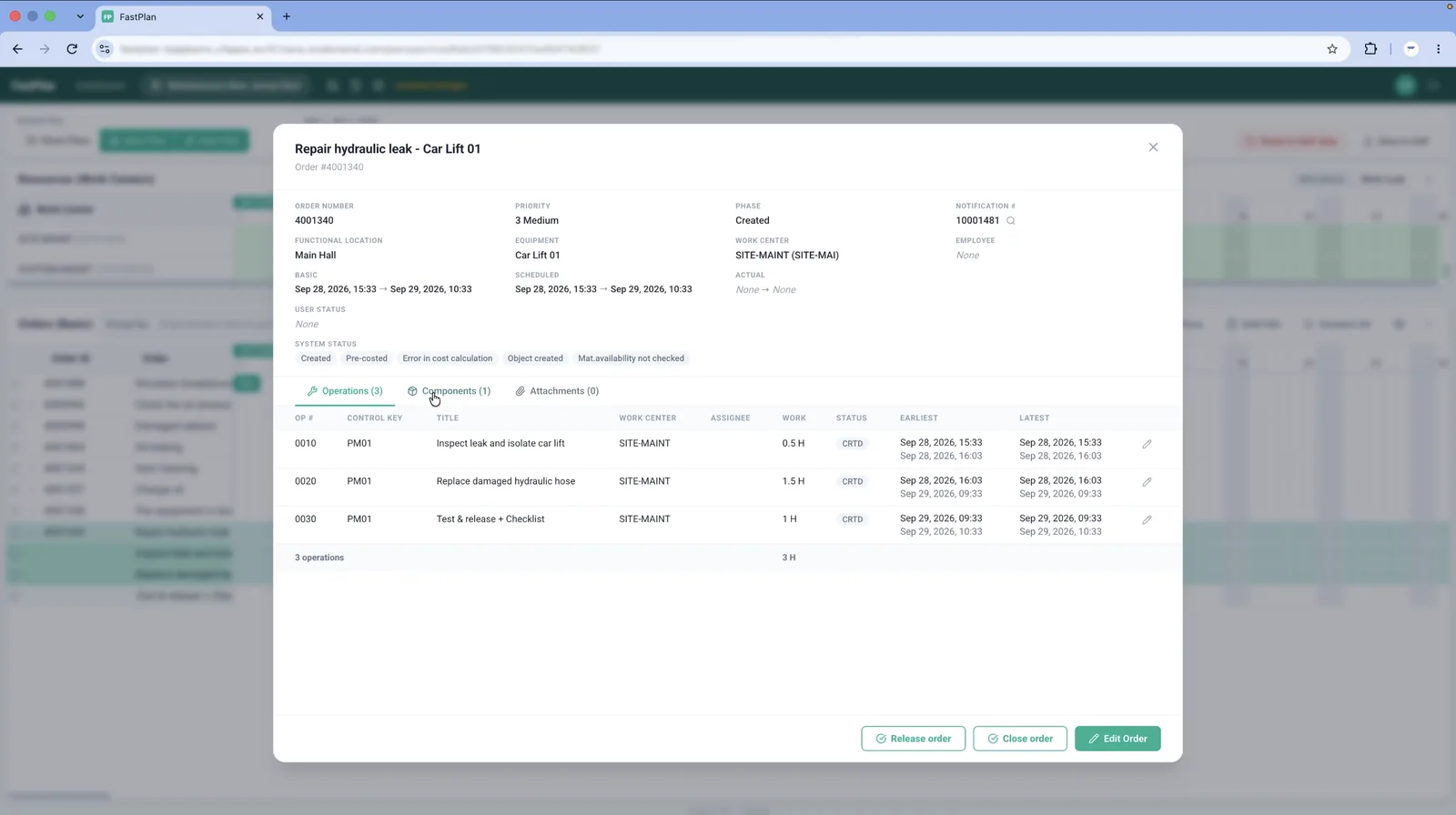
He then finds the car lift order, expands it to operation level, and assigns a technician to each operation.
From the same perspective he can edit the order, check spare parts, attachments, and work instructions, see the notification it came from, and later close the order.
The technician does the work.
The order reads "Repair hydraulic leak, Car Lift 01."
New Jersey has three car lifts, so the technician checks the functional location and the equipment photo.
Before he starts, FastWork shows him:
- The hydraulic pressure measuring point and its previous readings.
- The bill of materials.
- Earlier notifications and orders.
- Technical documents.
- A 3D model of the lift.
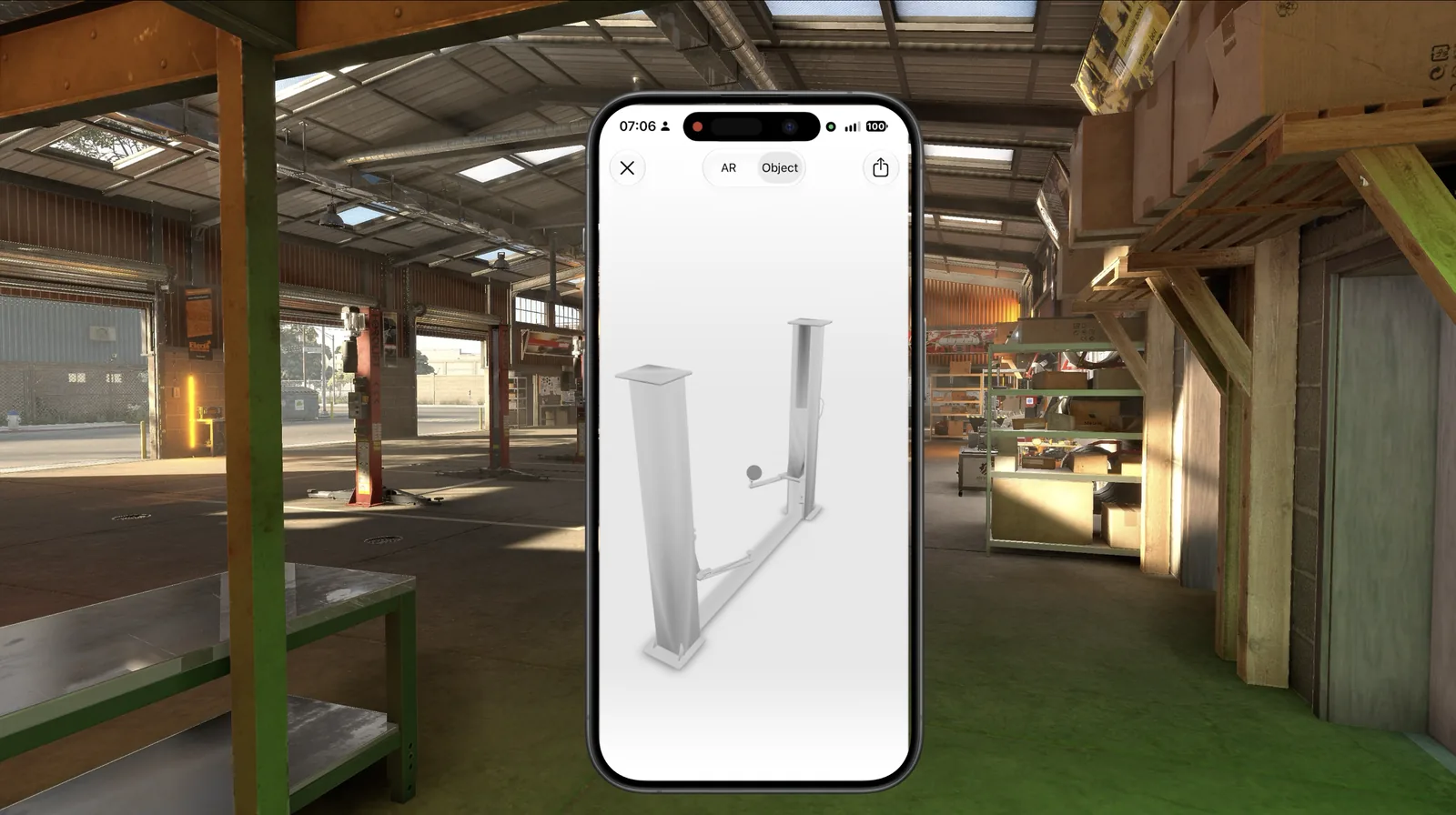
The order has three operations:
- Inspect and isolate the lift.
- Replace the hose.
- Test and release.
He starts the timer on the first one, puts the phone away, does the work, and comes back to submit the time confirmation.
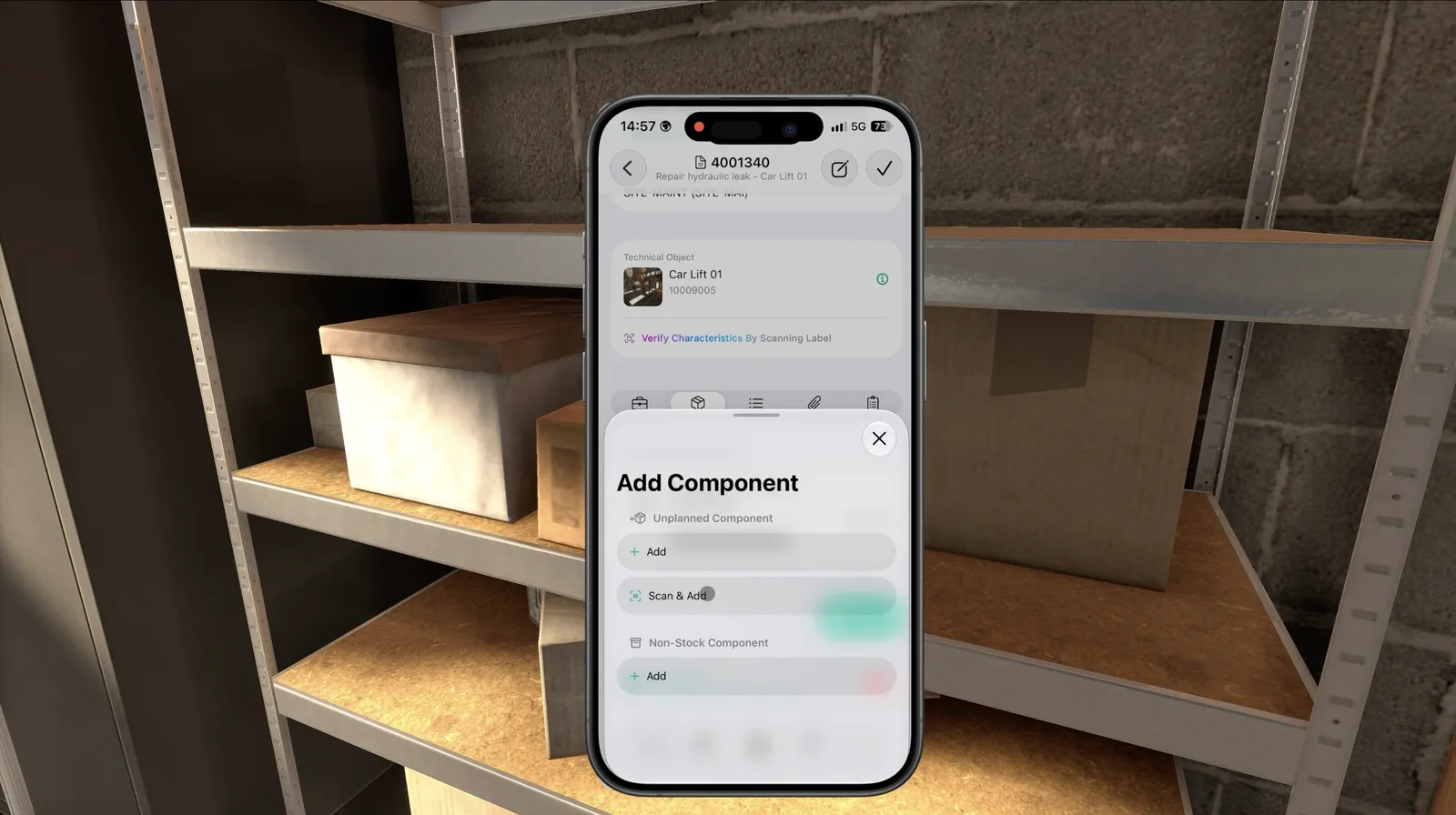
On the second operation, the planned hose turns out to be the wrong one. He fetches the right hose from spare parts storage, scans its label, and adds it to the order as an unplanned component. The phone is online, so the material consumption posts to SAP immediately.
On the third operation, he runs the return-to-service checklist, which covers the repair checks, pass or fail functional tests, a photo, the date and time, and his signature.
The planner closes the order.
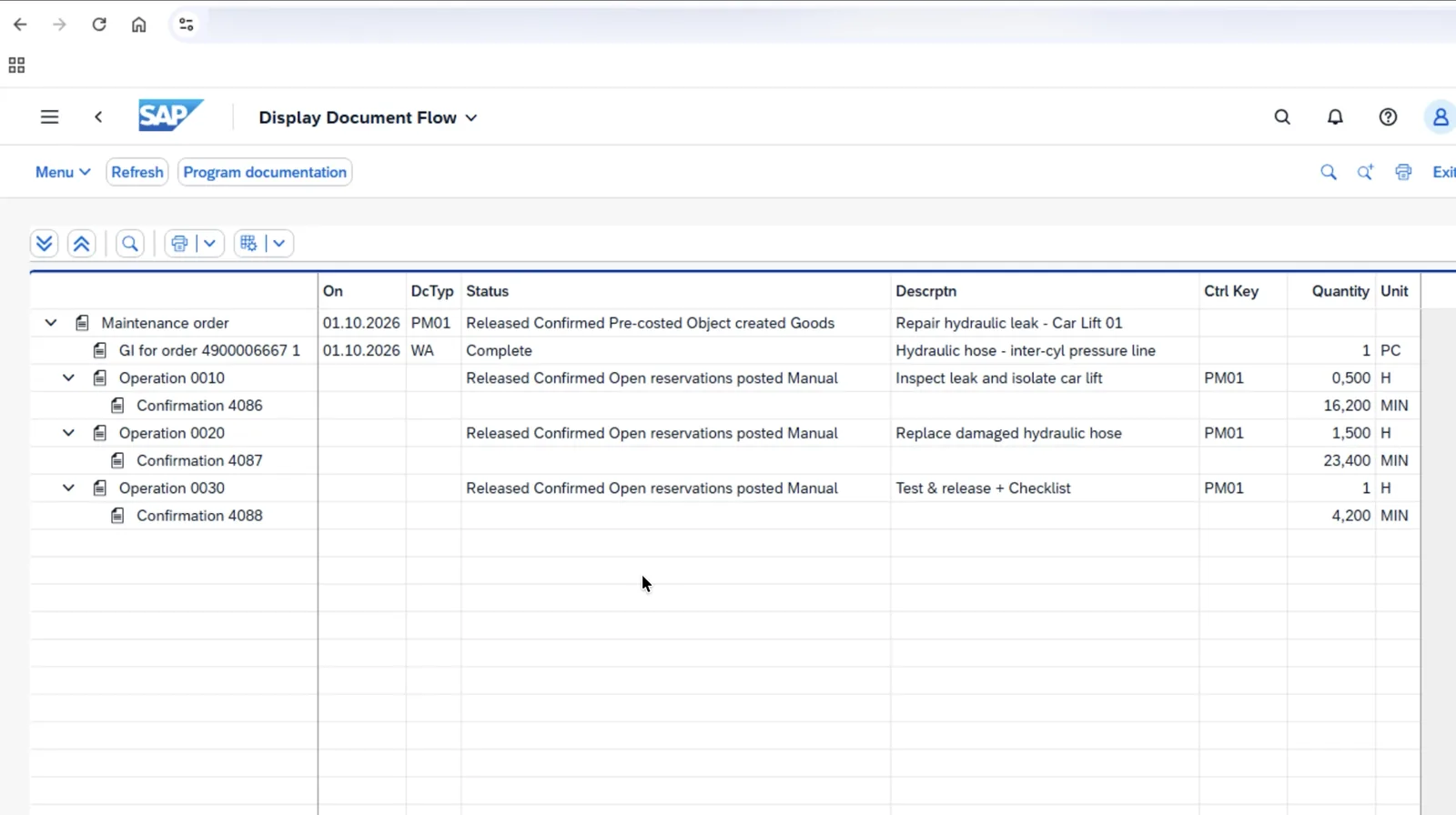
Back in SAP Fiori, the planner opens the order to check what reached SAP.
The time confirmations for all three operations are there.
The planner opens the submitted checklist in FastForms, where he can search by equipment or order number, and reviews the results, photo, and signature. The completed checklist is also attached to the order as a PDF, for audits or anyone who still likes paper. Then he closes the order in SAP.
SAPdude's summary of the technician's day is that a small part of the job was spent in the app and most of it on the repair. "Less screen time. More wrench time."
SAPdude's verdict, app by app.
Here's a summary of SAPdude's thoughts on each app he tested.
FastWork is the strongest part of the solution.
Those are his words. It is designed around technicians and field crews rather than people who enjoy navigating SAP screens.
Across the apps he tested, the screens are clean, the actions are understandable, and photos, annotations, notifications, and synchronization worked throughout his test.
"Would this reduce the training effort? Definitely."
SAPdude
FastForms is very practical.
He built a checklist in a few minutes, assigned it to the order, and completed it from FastWork, without inspection lots or the full EAM and QM integration.
It does not replace SAP QM in every scenario. For regulated inspections, calibration, or formal quality processes, QM may still be the right choice. For everyday maintenance checklists, FastForms removes a lot of complexity.
FastPlan is not RSH with an Arkyn logo.
He expected something akin to RSH, but that's not what FastPlan is.
There is some functional overlap, but FastPlan has its own approach to capacity, scheduling, and how it interacts with SAP. He only used a small part of it, and says as much in the review. The FastPlan page and our how-to videos have more information if you would like to delve deeper.
FastExternals was not graded.
He did not demo FastExternals, our app for managing contractors and distributing work orders to them, so he did not grade it.
The downsides of using Arkyn.
Here are four points from the end of the video, where he lays out the case against Arkyn.
Arkyn becomes another vendor in your architecture.
The apps connect to SAP through FastCloud and come as a managed subscription.
He sees the upside, since we run the platform, monitoring, and product updates, and the downside, which is dependency on our roadmap, service quality, pricing, and long-term stability.
You do not get unlimited internal development freedom.
The products are configurable, and special requirements may still need Arkyn or an implementation partner.
With a standard SAP solution, a company with the right internal competence can control more by itself. The question, as he puts it, is whether you actually have those people.
"Owning a solution internally sounds great until you discover that you need an SAP EAM consultant, a mobile specialist, a BTP expert, and an MDK developer just to keep everything alive."
SAPdude
A new application layer does not magically repair a broken SAP foundation.
"If your functional locations are wrong, task lists are empty, materials cannot be found, and work center capacity is missing, a beautiful mobile app will not perform an exorcism on your master data."
SAPdude
You still need proper EAM processes, master data, authorizations, integration testing, and support.
After his test, we shared with him how FastWork can help technicians improve some master data issues. He didn’t have the opportunity to test that, so it's not included in the review. Nevertheless, for a bigger cleanup, our implementation partners can help.
Compare the complete operating model, not one license price.
For Arkyn, that means the subscriptions, FastCloud, implementation, support, and future extensions.
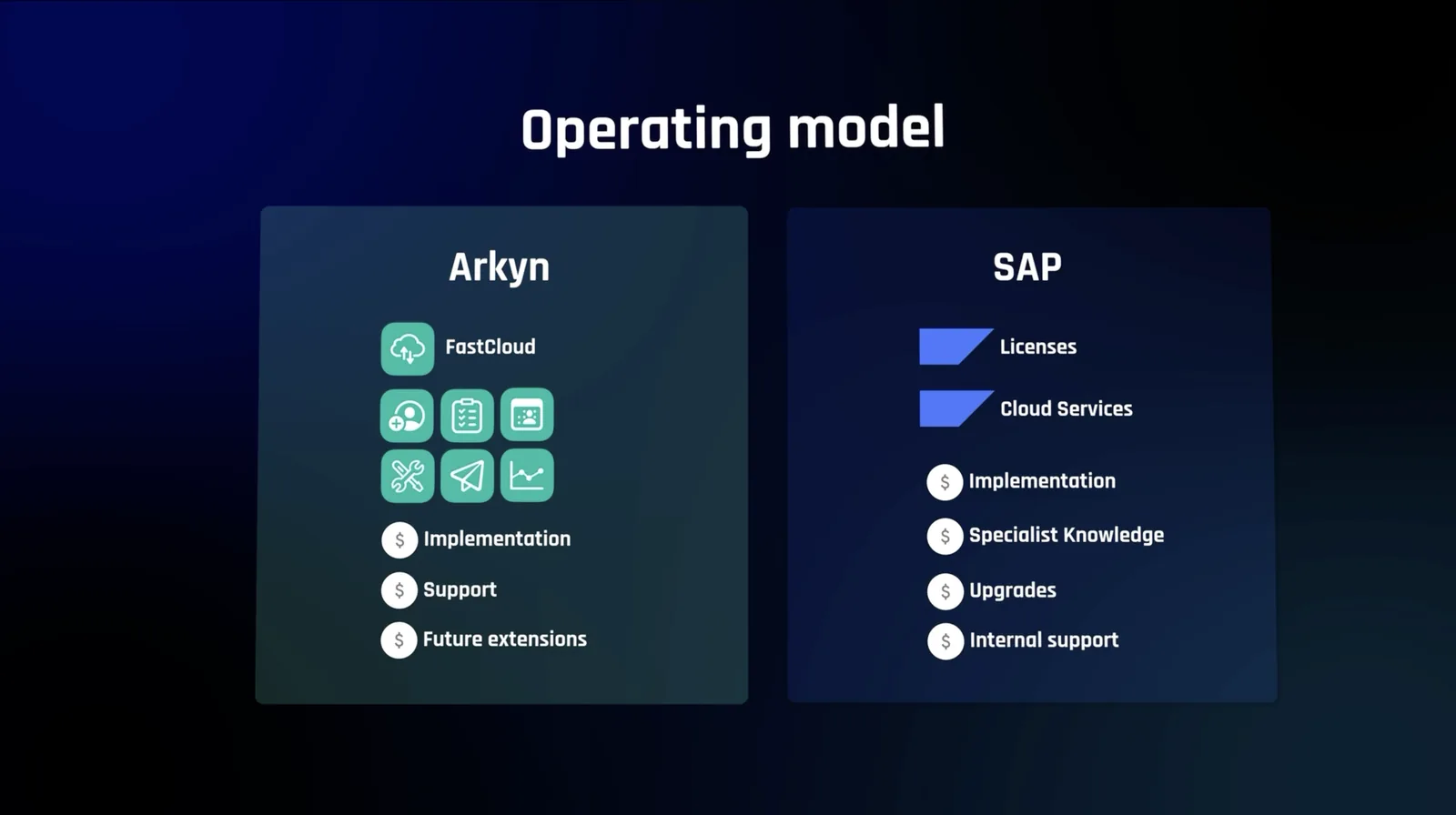
For standard SAP, it means the licenses, BTP services, implementation effort, specialist knowledge, upgrades, and internal support.
"The cheapest-looking license can still create the most expensive solution."
SAPdude
If you would like a price comparison without contacting us, our prices are on our pricing page. And I'd recommend playing around with our EAM ROI calculator to get a good understanding of the cost of poor adoption.
Start with a pilot.
He is also clear about when Arkyn may not be worth it. If your existing SAP apps already work well, your teams are happy with them, and you can support them efficiently, he says another subscription layer may not be justified.
That’s why his recommendation for New Jersey is a pilot, and he lists what to measure:
- Technician adoption.
- Reporting time.
- Data quality.
- Planning effort.
- Schedule compliance.
- Support effort.
- Total cost.
And from there, maybe New Jersey adopts the FastApps. Maybe the business case is not strong enough and the site stays on SAP EAM alone, like Texas. Maybe the pilot goes so well that Texas adopts the apps too.
And his closing message:
"I'm an SAP enthusiast, but that does not mean that SAP produces the best application for every problem. If you are assessing maintenance mobility, planning, digital forms, or contractor execution, Arkyn deserves a place on your shortlist."
SAPdude
You can watch the full video at the top of this article or on YouTube. And if you want to run a similar test using your own data, get in touch and we'd be happy to set up a demo or pilot.